663 private links

I did a web search to see what was returned when looking for the September 2020 San Franciso ‘orange sky’ event and purple air and the below link was one of the first returned
The Bay Area Just Turned Orange. All Eyes A…



There are so many books Open Source Python 3.x Programming Books Licensed Under Creative Commons License. Here, I list some of these books that I find very interesting. In fact, I got the question …
PALA presentation from Amy Blau, Whitman College. June 22, 2023
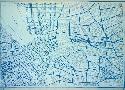
One of hundreds of thousands of free digital items from The New York Public Library.
Image for Week 5 Page

Community scientists document bird deaths from window strikes for data-driven advocacy Collisions with building windows is the 2nd largest mortality risk to migratory birds, yet local governments lag in implementing bird-safe standards for new and existing structures. In an effort to collect d
Free essays, homework help, flashcards, research papers, book reports, term papers, history, science, politics

A collection of storymaps, dashboards, and applications from students involved in the 2021 course Mapping Justice: Designing Geospatial Tools for Social Change. If you have any questions or comments, feel free to reach out: hello@trubel.co

The Food Environment Atlas is a web-based mapping tool developed by ERS that allows users to compare U.S. counties in terms of their “food environment”—indicators that help determine and reflect a community’s access to affordable, healthy food. Food environment factors—such as store/restaurant proximity, food prices, food and nutrition assistance programs, and community characteristics—interact to influence food choices and diet quality. The Atlas currently includes over 275 indicators of the food environment. The year and geographic level of the indicators vary to better accommodate data from a variety of sources. The most recent county-level, State, or regional data are used whenever possible.

AM Query FM Query TV Query Audio Division Video Division Search for radio station information in the FM broadcast band (88 MHz to 108 MHz). You may request one-line-per-record list output, or more detailed "query" output. The data files used for this query are updated each morning. Please refer any comments or suggestions on the FM Query to Dale Bickel, dale.bickel@fcc.gov. Selection of a TEXT output option allows the user to generate a formatted output table which can be imported into other programs.